New York Becomes First State to Impose a Moratorium on AI Data Center Construction
· Infrastructure
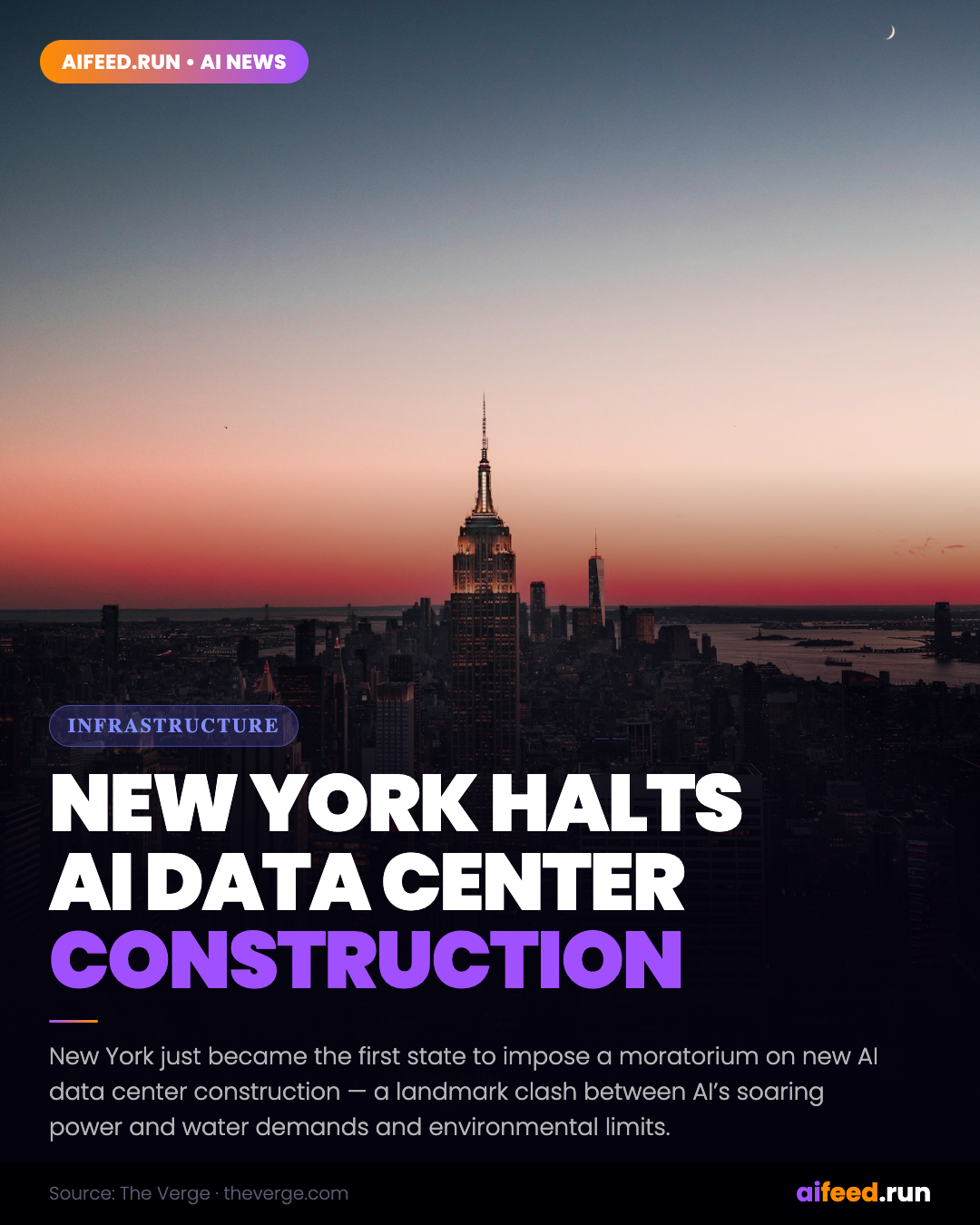
New York just became the first state to impose a moratorium on new AI data center construction — a landmark clash between AI's soaring power and water demands and environmental limits.
New York just became the first state to impose a moratorium on AI data center construction—a watershed moment that signals growing tension between technological ambition and environmental responsibility.
This decision marks a significant inflection point in how states are approaching the infrastructure demands of artificial intelligence. Data centers are the backbone of AI systems, but they're also resource-intensive facilities that consume enormous amounts of electricity and water. New York's move reflects mounting pressure from environmental advocates and policymakers concerned about the sustainability implications of unchecked AI expansion during a critical period for climate action.
From a business perspective, this moratorium creates a complex landscape for tech companies planning infrastructure investments. Organizations that have targeted the Northeast corridor for data center development now face regulatory barriers that could redirect billions in capital investment. This isn't merely a local issue—it sets a precedent that other states and regions may follow, fundamentally altering how companies evaluate expansion strategies.
The broader AI industry implications are substantial. As demand for computational power accelerates, data center availability will become a critical competitive factor. This could incentivize innovation in energy-efficient computing, alternative power sources, and distributed infrastructure models. Companies that can demonstrate sustainability leadership may gain regulatory approval where others face barriers.
Looking forward, we should expect more states to implement similar measures. The conversation is shifting from "Can we build this?" to "Should we build this here, and at what cost?" This represents a maturation of the AI policy conversation beyond pure innovation enablement to include environmental stewardship and resource management.
The real question isn't whether AI development will continue—it will—but where, how sustainably, and at what pace that development occurs.
Source: The Verge
More AI news
- AMD's Helios Breaks Into Enterprise AI — and Microsoft Is an Early Customer
- Police Are Spending Millions on AI — and the Market Is Largely Hidden
- OpenAI's First Device Is Reportedly a Humanlike, Rechargeable AI Speaker
- Waze Rolls Out AI Features: Motorcycle Mode and a 'Less Chatty' Option
- Meta Jumps Into the AI Coding Market to Chase Anthropic and OpenAI
- U.S. Lawmakers Probe Growing Use of Chinese AI Models in American Companies
 `;
}
function imgFallback(el) {
if (!el.dataset.fb) { el.dataset.fb = '1'; el.removeAttribute('srcset'); el.src = el.dataset.full; }
else { el.style.visibility = 'hidden'; }
}
function formatDate(iso) {
if (!iso) return '';
return new Date(iso).toLocaleDateString('en-US', { month: 'long', day: 'numeric', year: 'numeric' });
}
function handleSubscribe(e) {
e.preventDefault();
const email = document.getElementById('inline-email').value;
e.target.reset();
goSubscribe(email, 'article');
}
// One step: the email typed on the page goes straight to Beehiiv's confirm page (no second form).
function goSubscribe(email, source) {
window.__subSource = source;
const url = 'https://magic.beehiiv.com/v1/eb0b9508-1ffd-4fb1-a63c-e762fa86569c?email=' + encodeURIComponent(email)
+ '&utm_source=aifeed.run&utm_medium=website&utm_campaign=' + encodeURIComponent(source || 'site');
// Same tab (no popup: in-app browsers like Instagram's prompt on new windows); Beehiiv sends the visitor to our thanks page after the one tap.
window.location.href = url + '&redirect_to=' + encodeURIComponent('https://aifeed.run/subscribe/thanks/'); return;
try { w.opener = null; } catch (err) {}
document.getElementById('sub-email-field').value = email;
document.getElementById('sub-form-state').style.display = 'none';
document.getElementById('sub-success-state').style.display = 'block';
document.getElementById('sub-overlay').style.display = 'flex';
document.body.style.overflow = 'hidden';
}
function openSubOverlay(email) {
document.getElementById('sub-email-field').value = email;
document.getElementById('sub-form-state').style.display = 'block';
document.getElementById('sub-success-state').style.display = 'none';
document.getElementById('sub-btn').textContent = 'Subscribe — It\'s Free →';
document.getElementById('sub-btn').disabled = false;
document.getElementById('sub-overlay').style.display = 'flex';
document.body.style.overflow = 'hidden';
}
const BEEHIIV_SUBSCRIBE_URL = 'https://magic.beehiiv.com/v1/eb0b9508-1ffd-4fb1-a63c-e762fa86569c'; // Beehiiv public Magic Link for AIFeed.run (pub_eb0b9508-…), no API key
async function submitSubscribe(e) {
e.preventDefault();
const email = document.getElementById('sub-email-field').value;
const btn = document.getElementById('sub-btn');
btn.textContent = 'Opening signup...';
btn.disabled = true;
// Opens Beehiiv's one-click confirm page for this email ("You'll be subscribed with …"). No secret client-side.
const bhUrl = BEEHIIV_SUBSCRIBE_URL + '?email=' + encodeURIComponent(email)
+ '&utm_source=aifeed.run&utm_medium=website&utm_campaign=' + encodeURIComponent(window.__subSource || 'site');
// Same tab (no popup: in-app browsers like Instagram's prompt on new windows); Beehiiv sends the visitor to our thanks page after the one tap.
window.location.href = bhUrl + '&redirect_to=' + encodeURIComponent('https://aifeed.run/subscribe/thanks/'); return;
try { w.opener = null; } catch (err) {}
document.getElementById('sub-form-state').style.display = 'none';
document.getElementById('sub-success-state').style.display = 'block';
}
function closeSubOverlay(e) {
if (e && e.target && e.target.id !== 'sub-overlay' && e.target.id !== 'sub-close-btn') return;
document.getElementById('sub-overlay').style.display = 'none';
document.body.style.overflow = '';
}
function copyLink() {
navigator.clipboard.writeText(window.location.href).then(() => {
const t = document.getElementById('toast');
t.textContent = '🔗 Link copied!';
t.classList.add('show');
setTimeout(() => t.classList.remove('show'), 2500);
});
}
function showToast() {
const t = document.getElementById('toast');
t.textContent = '🎉 You\'re subscribed! Welcome to the feed.';
t.classList.add('show');
setTimeout(() => t.classList.remove('show'), 3500);
}
function getDemoPosts() {
return [
{
id: 'demo-1', slug: 'apple-building-ai-glasses-beat-meta',
headline: 'Apple Is Building AI Glasses To Beat Meta',
summary: 'No screen. Just AI, cameras, and Siri. 4 designs. Premium acetate. Ships 2027.',
body: '