Jury Rules Against Elon Musk in $150B OpenAI Lawsuit
· Business
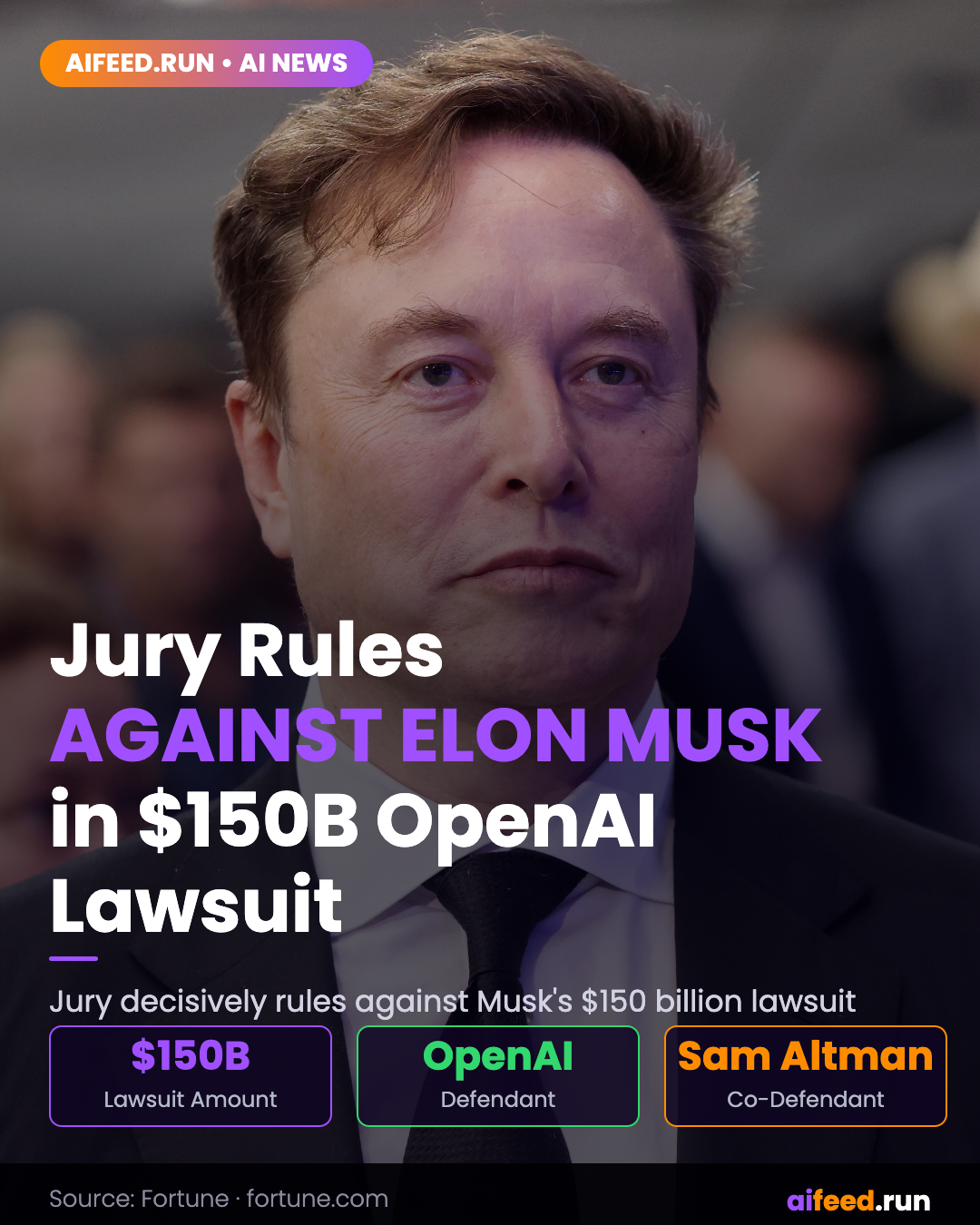
A jury rejected Musk's $150 billion lawsuit against OpenAI and Sam Altman, clearing a major legal cloud over the company and setting precedent for AI industry disputes.
A jury has ruled decisively against Elon Musk in his $150 billion lawsuit against OpenAI and Sam Altman, marking a watershed moment in AI industry litigation. This verdict essentially closes the door on Musk's attempt to challenge one of the most transformative partnerships in technology, and it carries profound implications for how courts will evaluate disputes within the AI sector going forward.
Musk's core argument centered on OpenAI's alleged departure from its founding mission as a nonprofit organization dedicated to beneficial AI development. He contended that the company's pivot toward commercialization—particularly its landmark partnership with Microsoft—constituted a fundamental betrayal of its original principles. The jury's rejection of this claim suggests that courts recognize the realities of scaling AI research: developing cutting-edge technology requires substantial capital investment and business partnerships.
For investors and corporate strategists, this ruling provides crucial clarity. It signals that founding principles, while important for brand narratives, won't serve as enforceable constraints on business evolution in court. Companies can pivot their models, pursue commercialization, and form strategic partnerships without fear of founder lawsuits based on mission drift allegations. This reduces legal uncertainty around business pivots in the AI space.
The broader AI industry now has judicial confirmation that commercial viability and nonprofit origins aren't inherently contradictory in the eyes of American courts. This verdict legitimizes the hybrid models many AI companies are pursuing—balancing public benefit with shareholder returns and technological advancement. We're likely to see more aggressive commercialization strategies across the sector.
Looking ahead, this sets a precedent that could reshape how AI governance debates play out. Regulatory frameworks will matter more than shareholder litigation in determining industry direction. Companies will invest less in defensive legal postures around mission statements and more in proactive regulatory engagement.
The takeaway: OpenAI now operates with significantly reduced legal headwinds, and the industry has clarity that business evolution trumps founding promises in court.
Source: Fortune · https://fortune.com/2026/05/18/jury-rules-against-elon-musk-in-suit-against-openai/
Source: Fortune
More AI news
- Gemini Omni, the ‘create anything’ model, starts today with lifelike video
- Would you let robots spend your money? Google is betting on it
- Blackstone to Invest $5 Billion in AI Infrastructure Venture with Google
- Voice AI Systems Are Vulnerable to Hidden Audio Attacks
- OpenAI Now Wants ChatGPT to Access Your Bank Accounts
- xAI Introduces Grok Build, Its AI Coding Agent
 `;
}
function imgFallback(el) {
if (!el.dataset.fb) { el.dataset.fb = '1'; el.removeAttribute('srcset'); el.src = el.dataset.full; }
else { el.style.visibility = 'hidden'; }
}
function formatDate(iso) {
if (!iso) return '';
return new Date(iso).toLocaleDateString('en-US', { month: 'long', day: 'numeric', year: 'numeric' });
}
function handleSubscribe(e) {
e.preventDefault();
const email = document.getElementById('inline-email').value;
e.target.reset();
goSubscribe(email, 'article');
}
// One step: the email typed on the page goes straight to Beehiiv's confirm page (no second form).
function goSubscribe(email, source) {
window.__subSource = source;
const url = 'https://magic.beehiiv.com/v1/eb0b9508-1ffd-4fb1-a63c-e762fa86569c?email=' + encodeURIComponent(email)
+ '&utm_source=aifeed.run&utm_medium=website&utm_campaign=' + encodeURIComponent(source || 'site');
// Same tab (no popup: in-app browsers like Instagram's prompt on new windows); Beehiiv sends the visitor to our thanks page after the one tap.
window.location.href = url + '&redirect_to=' + encodeURIComponent('https://aifeed.run/subscribe/thanks/'); return;
try { w.opener = null; } catch (err) {}
document.getElementById('sub-email-field').value = email;
document.getElementById('sub-form-state').style.display = 'none';
document.getElementById('sub-success-state').style.display = 'block';
document.getElementById('sub-overlay').style.display = 'flex';
document.body.style.overflow = 'hidden';
}
function openSubOverlay(email) {
document.getElementById('sub-email-field').value = email;
document.getElementById('sub-form-state').style.display = 'block';
document.getElementById('sub-success-state').style.display = 'none';
document.getElementById('sub-btn').textContent = 'Subscribe — It\'s Free →';
document.getElementById('sub-btn').disabled = false;
document.getElementById('sub-overlay').style.display = 'flex';
document.body.style.overflow = 'hidden';
}
const BEEHIIV_SUBSCRIBE_URL = 'https://magic.beehiiv.com/v1/eb0b9508-1ffd-4fb1-a63c-e762fa86569c'; // Beehiiv public Magic Link for AIFeed.run (pub_eb0b9508-…), no API key
async function submitSubscribe(e) {
e.preventDefault();
const email = document.getElementById('sub-email-field').value;
const btn = document.getElementById('sub-btn');
btn.textContent = 'Opening signup...';
btn.disabled = true;
// Opens Beehiiv's one-click confirm page for this email ("You'll be subscribed with …"). No secret client-side.
const bhUrl = BEEHIIV_SUBSCRIBE_URL + '?email=' + encodeURIComponent(email)
+ '&utm_source=aifeed.run&utm_medium=website&utm_campaign=' + encodeURIComponent(window.__subSource || 'site');
// Same tab (no popup: in-app browsers like Instagram's prompt on new windows); Beehiiv sends the visitor to our thanks page after the one tap.
window.location.href = bhUrl + '&redirect_to=' + encodeURIComponent('https://aifeed.run/subscribe/thanks/'); return;
try { w.opener = null; } catch (err) {}
document.getElementById('sub-form-state').style.display = 'none';
document.getElementById('sub-success-state').style.display = 'block';
}
function closeSubOverlay(e) {
if (e && e.target && e.target.id !== 'sub-overlay' && e.target.id !== 'sub-close-btn') return;
document.getElementById('sub-overlay').style.display = 'none';
document.body.style.overflow = '';
}
function copyLink() {
navigator.clipboard.writeText(window.location.href).then(() => {
const t = document.getElementById('toast');
t.textContent = '🔗 Link copied!';
t.classList.add('show');
setTimeout(() => t.classList.remove('show'), 2500);
});
}
function showToast() {
const t = document.getElementById('toast');
t.textContent = '🎉 You\'re subscribed! Welcome to the feed.';
t.classList.add('show');
setTimeout(() => t.classList.remove('show'), 3500);
}
function getDemoPosts() {
return [
{
id: 'demo-1', slug: 'apple-building-ai-glasses-beat-meta',
headline: 'Apple Is Building AI Glasses To Beat Meta',
summary: 'No screen. Just AI, cameras, and Siri. 4 designs. Premium acetate. Ships 2027.',
body: '