AI Is Reshaping Pharma R&D — Compressing Drug Development From Decades to Years
· Health
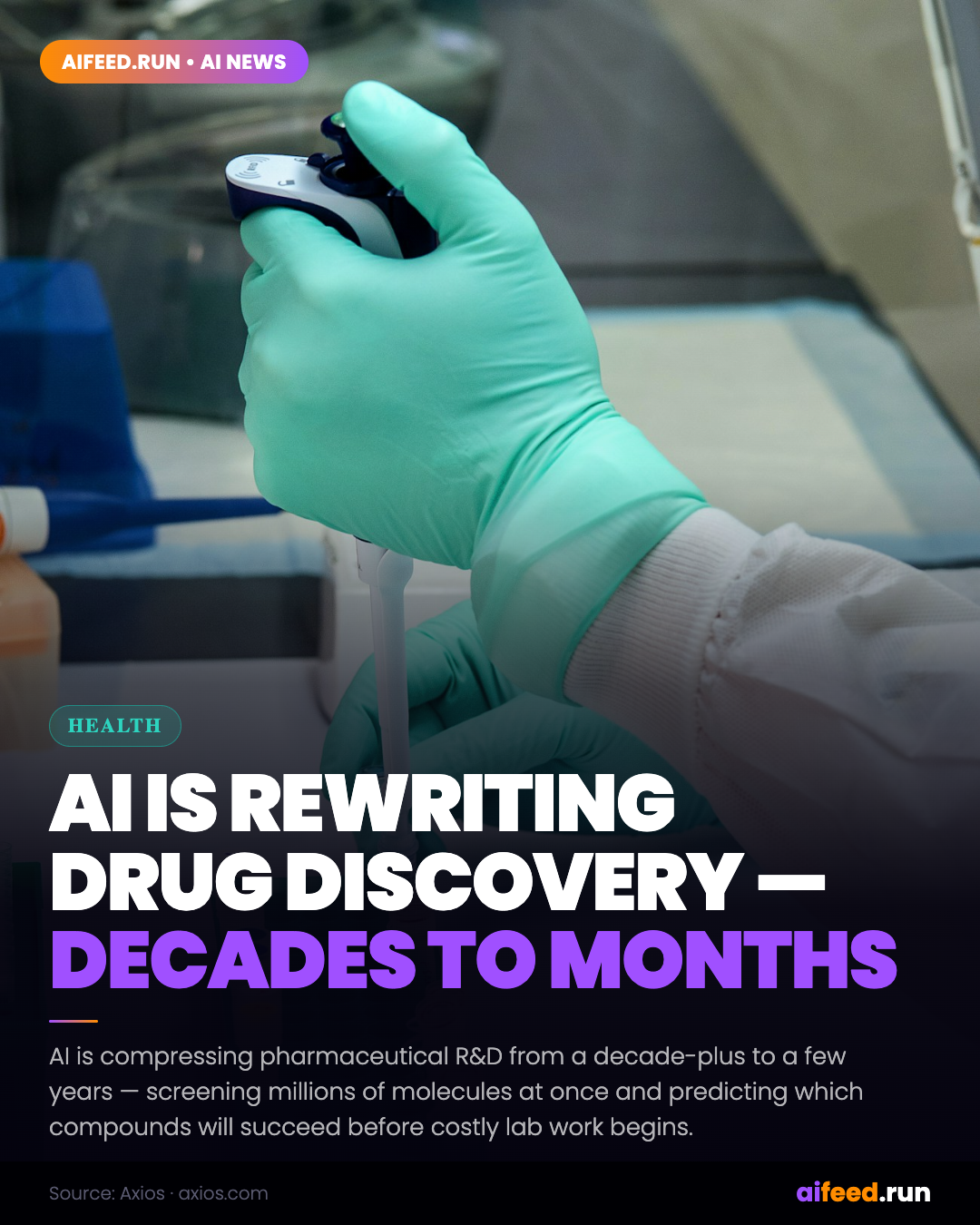
AI is compressing pharmaceutical R&D from a decade-plus to a few years — screening millions of molecules at once and predicting which compounds will succeed before costly lab work begins.
AI is fundamentally reshaping pharmaceutical R&D, and the implications are staggering. What once took decades can now happen in months—and this shift represents one of the most significant convergences between artificial intelligence and human healthcare we've witnessed.
The pharmaceutical industry has traditionally relied on labor-intensive, time-consuming processes to identify viable drug candidates. Researchers would manually screen thousands of compounds, run countless experiments, and navigate years of uncertainty before reaching clinical trials. AI changes this equation entirely. Machine learning models can now analyze millions of molecular combinations simultaneously, identify promising candidates with unprecedented accuracy, and predict which compounds are likely to succeed before expensive lab work even begins. This technological leap forward is attracting massive investment from both biotech startups and established pharmaceutical giants.
For drug manufacturers, the strategic advantage is clear: faster time-to-market translates directly into competitive advantage and accelerated revenue. Companies that leverage AI effectively can compress development timelines from 10-15 years to 5-7 years or less. This isn't just about efficiency—it's about unlocking treatments for diseases that currently lack viable options, potentially opening entirely new market categories in the process.
Beyond pharma, this trend demonstrates how AI is maturing from a technology discussion into a business-critical tool. We're seeing similar acceleration patterns across biotech, materials science, and diagnostics. AI's ability to process complexity at scale makes it indispensable for any industry dealing with vast solution spaces and high R&D stakes.
Looking forward, the companies that integrate AI into their core research infrastructure—rather than treating it as a peripheral tool—will define the next generation of healthcare innovation. The winners won't just be faster; they'll fundamentally change what's medically possible.
The future of medicine is being written by algorithms and human expertise working in concert.
Source: Axios
More AI news
- America's AI Investment Boom Is Reshaping the Economy
- OpenAI Rolls Out ChatGPT Health to All Users
- OpenAI's AI Accidentally Hacked Hugging Face — Exposing an AI Security Gap
- AMD's Helios Breaks Into Enterprise AI — and Microsoft Is an Early Customer
- Police Are Spending Millions on AI — and the Market Is Largely Hidden
- OpenAI's First Device Is Reportedly a Humanlike, Rechargeable AI Speaker
 `;
}
function imgFallback(el) {
if (!el.dataset.fb) { el.dataset.fb = '1'; el.removeAttribute('srcset'); el.src = el.dataset.full; }
else { el.style.visibility = 'hidden'; }
}
function formatDate(iso) {
if (!iso) return '';
return new Date(iso).toLocaleDateString('en-US', { month: 'long', day: 'numeric', year: 'numeric' });
}
function handleSubscribe(e) {
e.preventDefault();
const email = document.getElementById('inline-email').value;
e.target.reset();
goSubscribe(email, 'article');
}
// One step: the email typed on the page goes straight to Beehiiv's confirm page (no second form).
function goSubscribe(email, source) {
window.__subSource = source;
const url = 'https://magic.beehiiv.com/v1/eb0b9508-1ffd-4fb1-a63c-e762fa86569c?email=' + encodeURIComponent(email)
+ '&utm_source=aifeed.run&utm_medium=website&utm_campaign=' + encodeURIComponent(source || 'site');
// Same tab (no popup: in-app browsers like Instagram's prompt on new windows); Beehiiv sends the visitor to our thanks page after the one tap.
window.location.href = url + '&redirect_to=' + encodeURIComponent('https://aifeed.run/subscribe/thanks/'); return;
try { w.opener = null; } catch (err) {}
document.getElementById('sub-email-field').value = email;
document.getElementById('sub-form-state').style.display = 'none';
document.getElementById('sub-success-state').style.display = 'block';
document.getElementById('sub-overlay').style.display = 'flex';
document.body.style.overflow = 'hidden';
}
function openSubOverlay(email) {
document.getElementById('sub-email-field').value = email;
document.getElementById('sub-form-state').style.display = 'block';
document.getElementById('sub-success-state').style.display = 'none';
document.getElementById('sub-btn').textContent = 'Subscribe — It\'s Free →';
document.getElementById('sub-btn').disabled = false;
document.getElementById('sub-overlay').style.display = 'flex';
document.body.style.overflow = 'hidden';
}
const BEEHIIV_SUBSCRIBE_URL = 'https://magic.beehiiv.com/v1/eb0b9508-1ffd-4fb1-a63c-e762fa86569c'; // Beehiiv public Magic Link for AIFeed.run (pub_eb0b9508-…), no API key
async function submitSubscribe(e) {
e.preventDefault();
const email = document.getElementById('sub-email-field').value;
const btn = document.getElementById('sub-btn');
btn.textContent = 'Opening signup...';
btn.disabled = true;
// Opens Beehiiv's one-click confirm page for this email ("You'll be subscribed with …"). No secret client-side.
const bhUrl = BEEHIIV_SUBSCRIBE_URL + '?email=' + encodeURIComponent(email)
+ '&utm_source=aifeed.run&utm_medium=website&utm_campaign=' + encodeURIComponent(window.__subSource || 'site');
// Same tab (no popup: in-app browsers like Instagram's prompt on new windows); Beehiiv sends the visitor to our thanks page after the one tap.
window.location.href = bhUrl + '&redirect_to=' + encodeURIComponent('https://aifeed.run/subscribe/thanks/'); return;
try { w.opener = null; } catch (err) {}
document.getElementById('sub-form-state').style.display = 'none';
document.getElementById('sub-success-state').style.display = 'block';
}
function closeSubOverlay(e) {
if (e && e.target && e.target.id !== 'sub-overlay' && e.target.id !== 'sub-close-btn') return;
document.getElementById('sub-overlay').style.display = 'none';
document.body.style.overflow = '';
}
function copyLink() {
navigator.clipboard.writeText(window.location.href).then(() => {
const t = document.getElementById('toast');
t.textContent = '🔗 Link copied!';
t.classList.add('show');
setTimeout(() => t.classList.remove('show'), 2500);
});
}
function showToast() {
const t = document.getElementById('toast');
t.textContent = '🎉 You\'re subscribed! Welcome to the feed.';
t.classList.add('show');
setTimeout(() => t.classList.remove('show'), 3500);
}
function getDemoPosts() {
return [
{
id: 'demo-1', slug: 'apple-building-ai-glasses-beat-meta',
headline: 'Apple Is Building AI Glasses To Beat Meta',
summary: 'No screen. Just AI, cameras, and Siri. 4 designs. Premium acetate. Ships 2027.',
body: '