AI hallucinations are infiltrating expert work—and entering the permanent body of knowledge
· Research
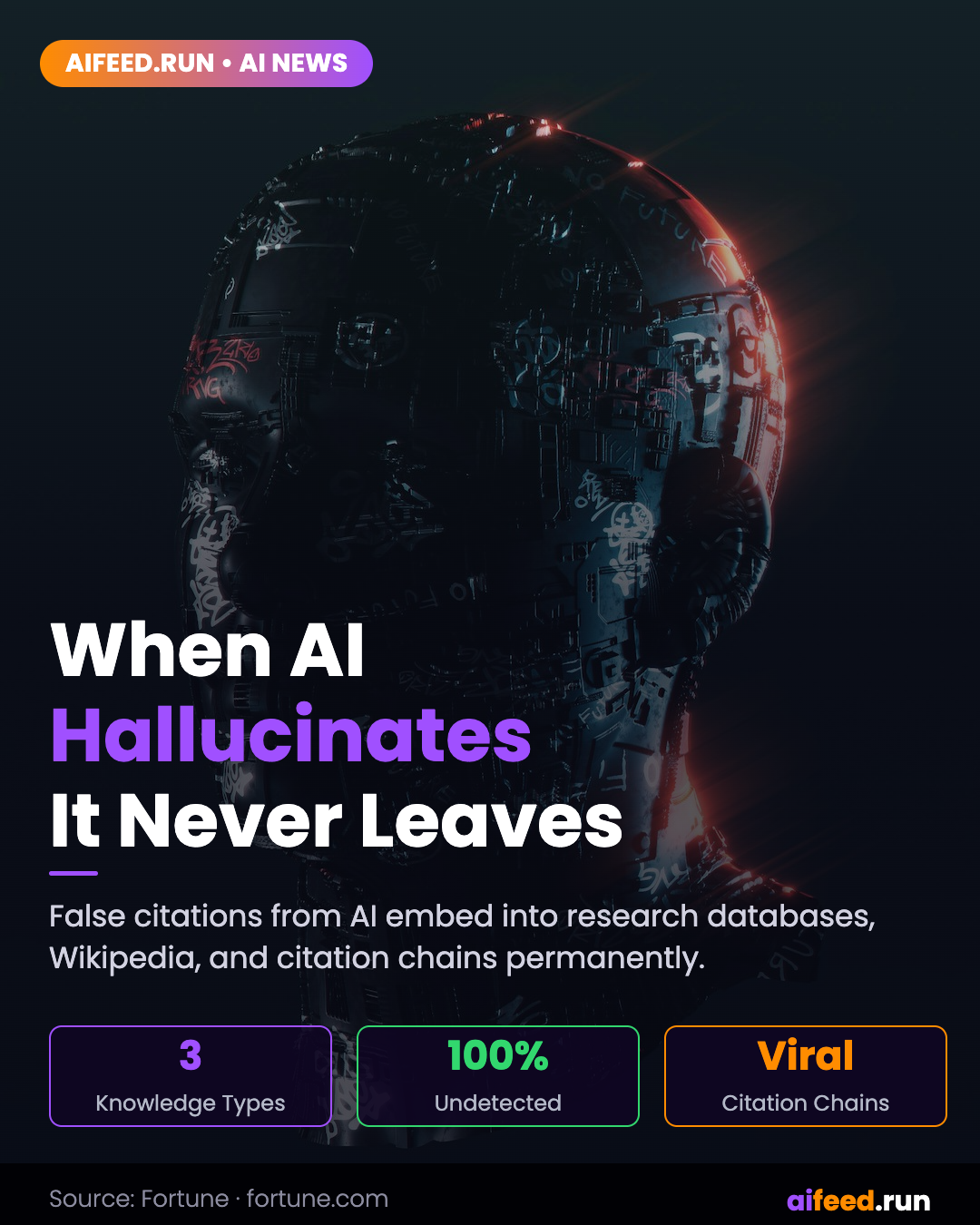
When AI systems confidently generate false citations, fabricate research findings, or invent medical treatments, they don't just disappear. They get published in peer-reviewed journals, cited by other
When AI systems confidently generate false citations, fabricate research findings, or invent medical treatments, they don't just disappear. They get published in peer-reviewed journals, cited by other researchers, and canonized as fact. This creates a cascading credibility problem where misinformation becomes institutionalized knowledge. The issue has moved beyond theoretical risk into active operational reality—affecting medical journals, scientific research, and expert work across disciplines.
The underlying technology challenge is fundamental: large language models generate plausible-sounding text based on pattern matching, not truth verification. They excel at mimicking expert language while having zero accountability for accuracy. As organizations race to integrate AI into knowledge work—from research assistance to clinical decision support—the speed of adoption is outpacing the rigor of verification protocols. We're witnessing a classic case of capability deployment outrunning safety infrastructure.
For organizations relying on AI for research, knowledge work, or expert analysis, the strategic implication is stark: you now own accountability for AI hallucinations in ways you didn't anticipate. Implementing robust human verification, citation tracking, and fact-checking becomes non-negotiable. Companies that ignore this risk exposure face reputational, legal, and operational liability—especially in regulated industries like healthcare and finance.
This moment signals a broader maturation challenge in the AI industry. The era of "move fast and iterate" is colliding with the reality that some domains (medicine, science, law) require absolute reliability. The competitive advantage will shift toward organizations that build trustworthy AI systems with human-in-the-loop verification, not purely automated solutions.
The path forward requires a fundamental reframing: AI should augment expert judgment, not replace it. Institutions need to establish clear verification standards before AI outputs enter permanent records. This isn't about limiting AI adoption—it's about making it actually reliable.
Source: Fortune · https://fortune.com/2026/05/24/ai-hallucinations-scientific-research-authors-medical-journal-treatment/
Source: Fortune
More AI news
- AI warfare is already here
- AI Agents Plunged the Tech World Into Chaos. Here’s Exactly How That Happened
- Pope Leo XIV Condemns AI as 'Instrument of Domination'
- Google’s new anything-to-anything AI model is wild
- China's AI just mapped its entire renewable energy grid. Here's why the rest of the world should pay attention
- 96% of IT pros use AI now: Their top 7 agentic applications and biggest implementation roadblocks
 `;
}
function imgFallback(el) {
if (!el.dataset.fb) { el.dataset.fb = '1'; el.removeAttribute('srcset'); el.src = el.dataset.full; }
else { el.style.visibility = 'hidden'; }
}
function formatDate(iso) {
if (!iso) return '';
return new Date(iso).toLocaleDateString('en-US', { month: 'long', day: 'numeric', year: 'numeric' });
}
function handleSubscribe(e) {
e.preventDefault();
const email = document.getElementById('inline-email').value;
e.target.reset();
goSubscribe(email, 'article');
}
// One step: the email typed on the page goes straight to Beehiiv's confirm page (no second form).
function goSubscribe(email, source) {
window.__subSource = source;
const url = 'https://magic.beehiiv.com/v1/eb0b9508-1ffd-4fb1-a63c-e762fa86569c?email=' + encodeURIComponent(email)
+ '&utm_source=aifeed.run&utm_medium=website&utm_campaign=' + encodeURIComponent(source || 'site');
// Same tab (no popup: in-app browsers like Instagram's prompt on new windows); Beehiiv sends the visitor to our thanks page after the one tap.
window.location.href = url + '&redirect_to=' + encodeURIComponent('https://aifeed.run/subscribe/thanks/'); return;
try { w.opener = null; } catch (err) {}
document.getElementById('sub-email-field').value = email;
document.getElementById('sub-form-state').style.display = 'none';
document.getElementById('sub-success-state').style.display = 'block';
document.getElementById('sub-overlay').style.display = 'flex';
document.body.style.overflow = 'hidden';
}
function openSubOverlay(email) {
document.getElementById('sub-email-field').value = email;
document.getElementById('sub-form-state').style.display = 'block';
document.getElementById('sub-success-state').style.display = 'none';
document.getElementById('sub-btn').textContent = 'Subscribe — It\'s Free →';
document.getElementById('sub-btn').disabled = false;
document.getElementById('sub-overlay').style.display = 'flex';
document.body.style.overflow = 'hidden';
}
const BEEHIIV_SUBSCRIBE_URL = 'https://magic.beehiiv.com/v1/eb0b9508-1ffd-4fb1-a63c-e762fa86569c'; // Beehiiv public Magic Link for AIFeed.run (pub_eb0b9508-…), no API key
async function submitSubscribe(e) {
e.preventDefault();
const email = document.getElementById('sub-email-field').value;
const btn = document.getElementById('sub-btn');
btn.textContent = 'Opening signup...';
btn.disabled = true;
// Opens Beehiiv's one-click confirm page for this email ("You'll be subscribed with …"). No secret client-side.
const bhUrl = BEEHIIV_SUBSCRIBE_URL + '?email=' + encodeURIComponent(email)
+ '&utm_source=aifeed.run&utm_medium=website&utm_campaign=' + encodeURIComponent(window.__subSource || 'site');
// Same tab (no popup: in-app browsers like Instagram's prompt on new windows); Beehiiv sends the visitor to our thanks page after the one tap.
window.location.href = bhUrl + '&redirect_to=' + encodeURIComponent('https://aifeed.run/subscribe/thanks/'); return;
try { w.opener = null; } catch (err) {}
document.getElementById('sub-form-state').style.display = 'none';
document.getElementById('sub-success-state').style.display = 'block';
}
function closeSubOverlay(e) {
if (e && e.target && e.target.id !== 'sub-overlay' && e.target.id !== 'sub-close-btn') return;
document.getElementById('sub-overlay').style.display = 'none';
document.body.style.overflow = '';
}
function copyLink() {
navigator.clipboard.writeText(window.location.href).then(() => {
const t = document.getElementById('toast');
t.textContent = '🔗 Link copied!';
t.classList.add('show');
setTimeout(() => t.classList.remove('show'), 2500);
});
}
function showToast() {
const t = document.getElementById('toast');
t.textContent = '🎉 You\'re subscribed! Welcome to the feed.';
t.classList.add('show');
setTimeout(() => t.classList.remove('show'), 3500);
}
function getDemoPosts() {
return [
{
id: 'demo-1', slug: 'apple-building-ai-glasses-beat-meta',
headline: 'Apple Is Building AI Glasses To Beat Meta',
summary: 'No screen. Just AI, cameras, and Siri. 4 designs. Premium acetate. Ships 2027.',
body: '